What are Large Language Models
Intro
At this point almost everyone in their life has had some sort of encounter with the concept of AI, whether it's intentiaonal by asking random questions to ChatGPT, or accidentally by simply looking something up on google and immediately have your question addressed by gemini.
But... What is AI? Artificial Intelligence sure... but what does that mean? How do these operations work and how does this machine have "intelligence". Most importantly why does it feel so reel and talk to me as a person?
In this lesson we'll build a clear mental model of what AI is, in the scope of Large Language Models (LLM) to give you a mental control of what's happening behind the scenes.
Lesson
What is Artificial Intelligence
Artificial intelligence (AI) is the ability of computers and software to perform tasks that normally require human intelligence, such as understanding language, recognizing images, solving problems, making predictions, and generating content. AI systems learn patterns from data and use those patterns to produce useful outputs or make decisions. For example, AI can recommend movies, detect objects in photographs, translate languages, help programmers write code, or power conversational assistants like ChatGPT. Unlike humans, AI does not inherently think, feel, or understand the world through lived experience; instead, it uses algorithms and learned patterns to process information and respond to the tasks it is given.
In English
Artificial Intelligence isn't intelligence at all. It is a computer running mathematical operations to make a statistical prediction for the right answer.
AI for Developers
In the world of development AI will likely represent the concept of Chatbots, meaning an AI System that can receive text and return a response usually also represented by text, but todays AI is considerable different than what it used to be and it's important we understand how we arrived here.
Rule Based Chatbots
E.L.I.Z.A. is the world's first chatbot, created by Joseph Weizenbaum at MIT between 1964 and 1966 to simulate a Rogerian psychotherapist.
Take some time to play around with it... trust me it won't take long before you realize it's capabilities are not very impressive, but why is that?
At the time this chatbot was created we didn't really have a way to enforce the concept of Machine Learning which created an extremely hard obstacle to tackle when dealing with user input from an everyday person and relating it to an output generated by a Machine.
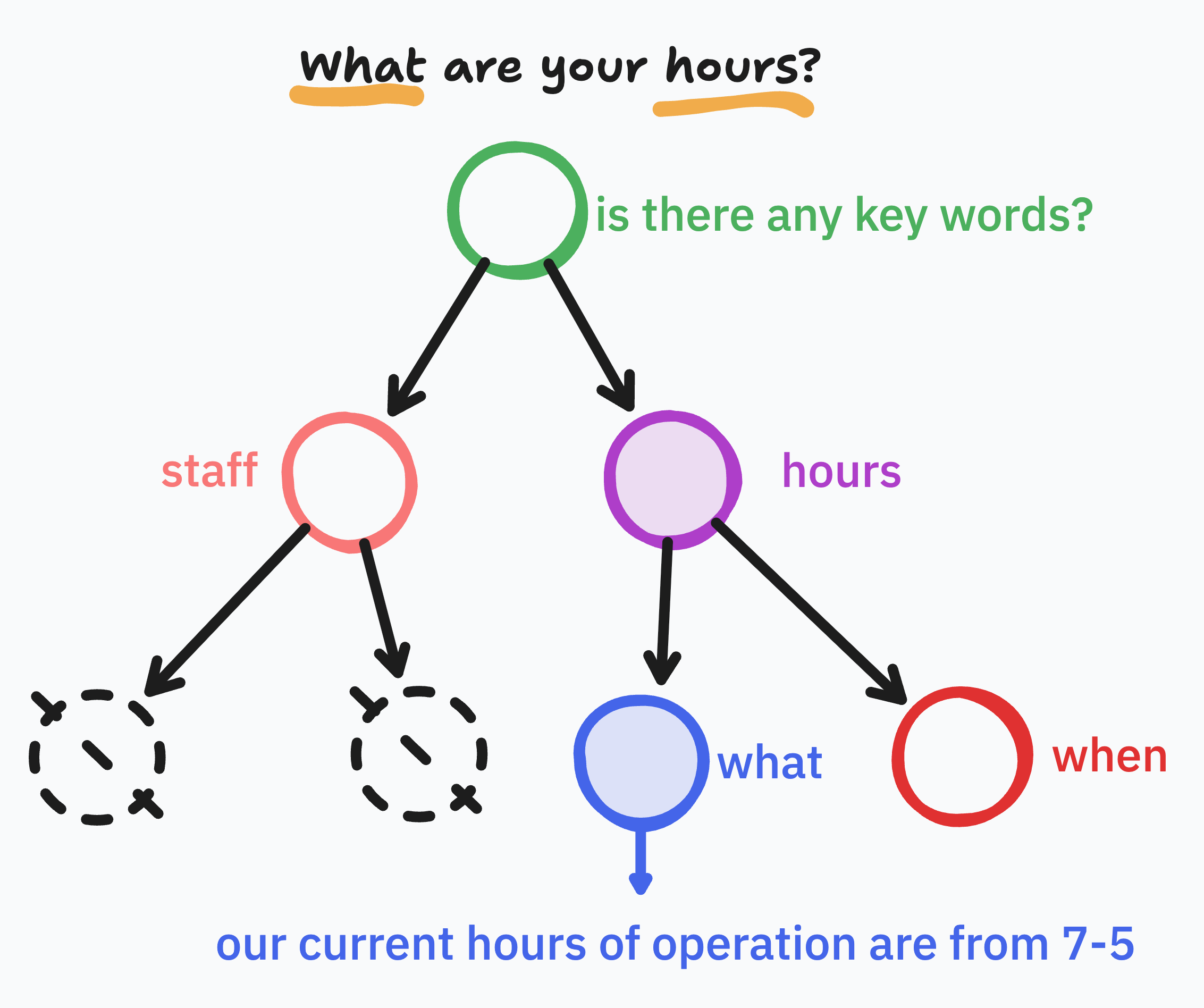
The solution for this was implementing a ternirary approach which essentially broke to if and/or else statements. This made the approach very isolated and incapable of accomplishing human like interactions.
The Turing Test
The attempts to generate human like conversations with Machines brought a testing method known as The Turing Test
The Turing Test, proposed by mathematician Alan Turing in 1950, is a measure of a machine's ability to exhibit intelligent behavior indistinguishable from a human. In the test, a human evaluator engages in text-based conversations with both a human and a machine without knowing which is which; if the evaluator cannot reliably tell them apart, the machine is said to have passed. While influential in AI philosophy, the test has become controversial as a measure of true intelligence, as modern chatbots can mimic human conversation without genuine understanding.
Retrieval Based Chatbots
As we continued to make progress in Machine Learning we developed a way to teach the Machine how to make predictions based on statistical data.
Machine Learning Engineers essentially developed a process to turn text into numerical data a machine can understand. These process works through Natural Language Processing and Word Embedding.
The easiest way to explain this is we take two words and find out how closely related they are, for example cat and lion may have a 70% relation but something like dog and mouse may have a 3% relation.
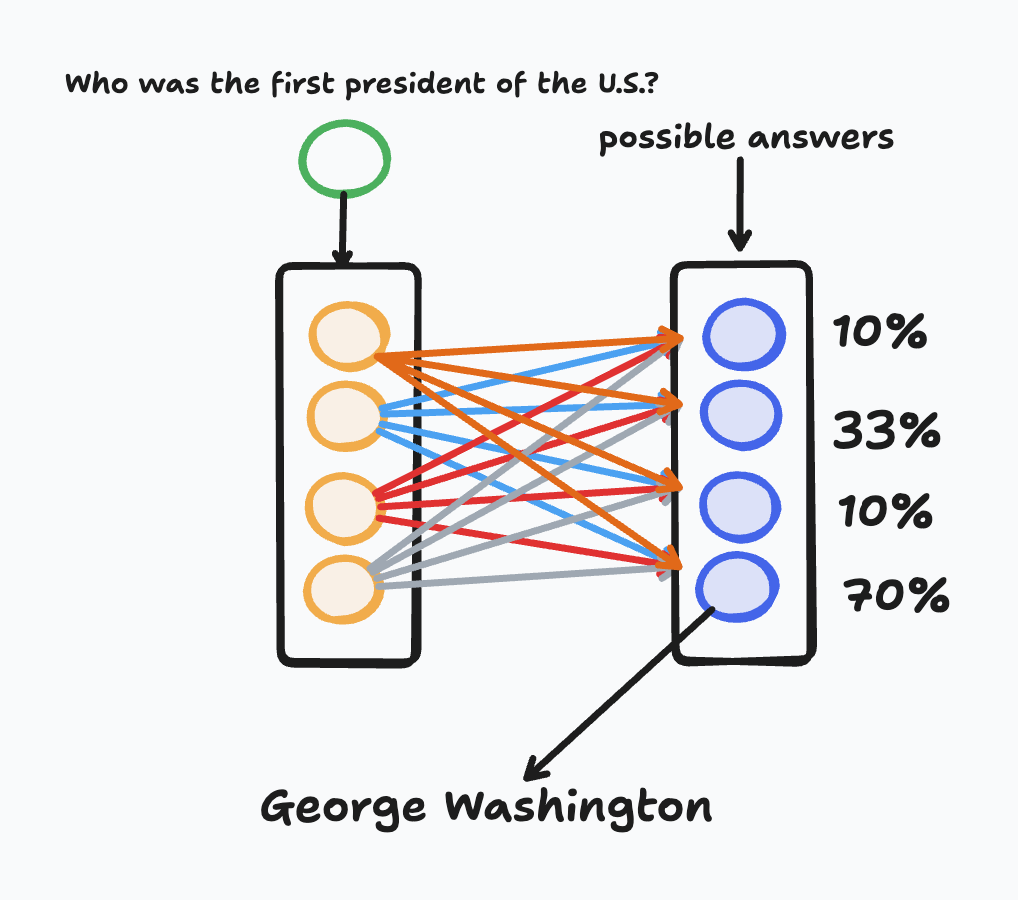
A Retrieval Based Chatbot has a determined number of answers and when we prompt it for information, it simply takes our keywords and finds the answer the correlates closest to those words.
Generative AI
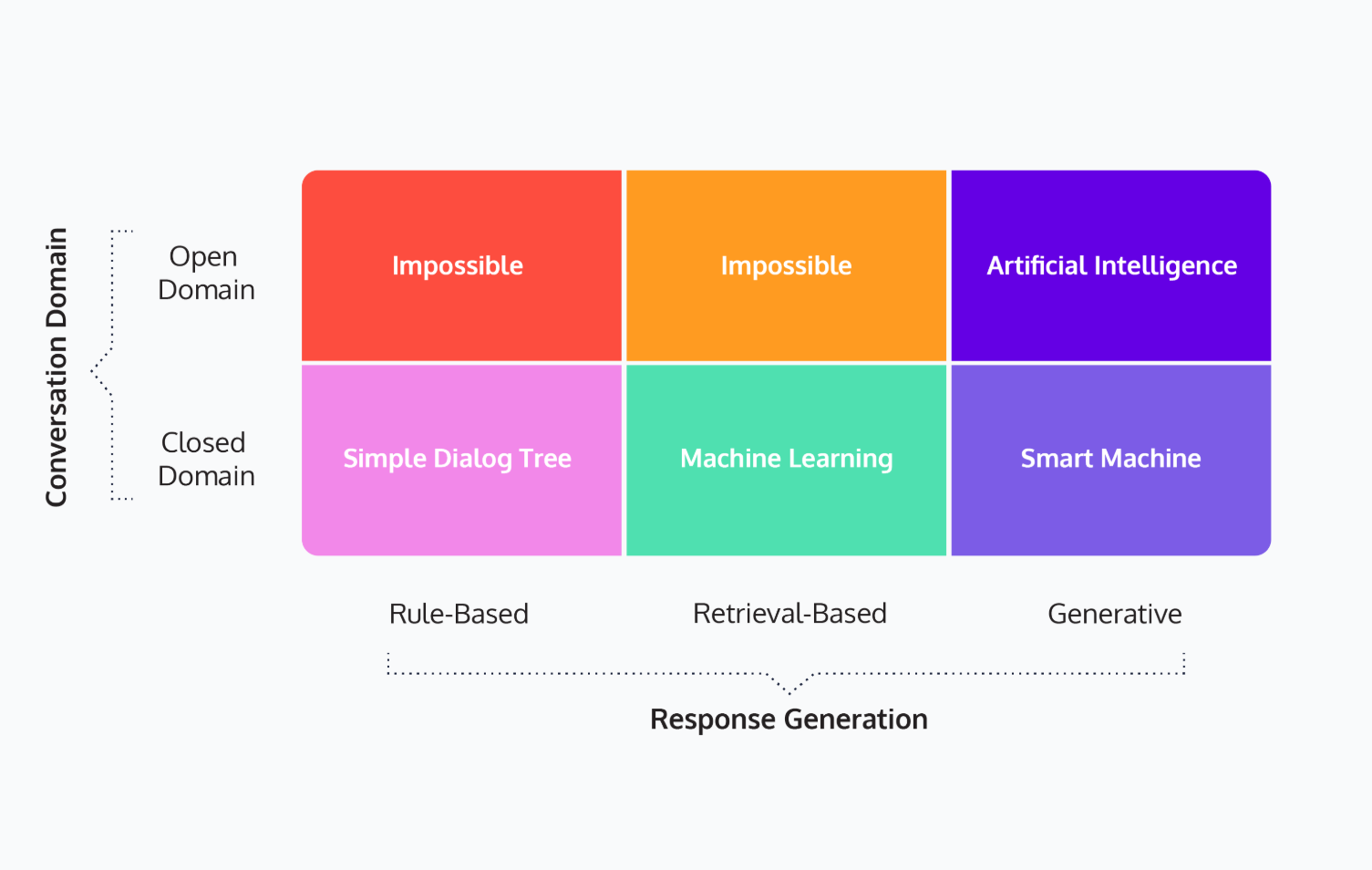
FINALLY!! We have arrived at what AI means to us now. Generative AI is completely different than the last two chatbots we've talked about. Generative AI doesn't have a pre-determined number of answers to choose from, instead it uses your text to generate the next word in it's response. As you can imagine these type of Chatbots typically rely on Large Language Models and are trained on extreme amounts of data hence making them large.
What is a Large Language Model?
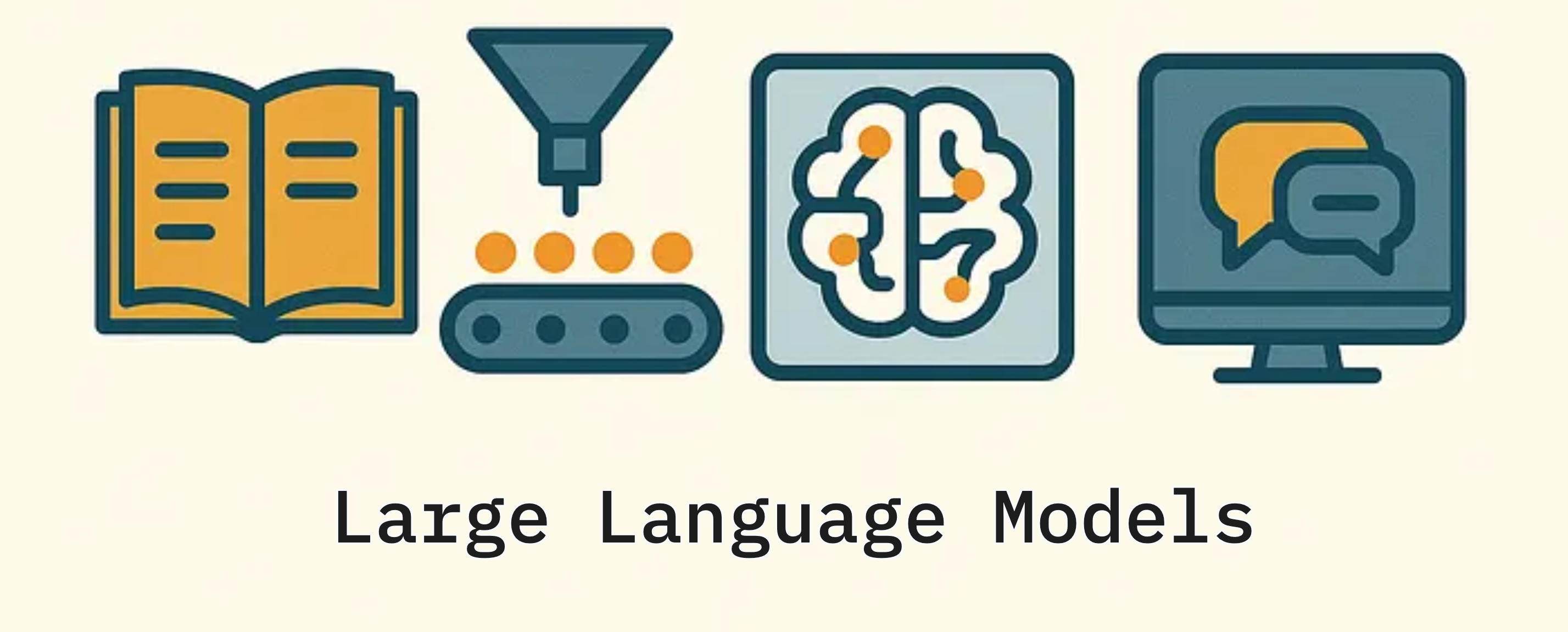
High Level Overview
Let's start with an analogy.
Imagine a jazz musician who has spent their entire life — not memorizing songs to play back on request — but absorbing millions of recordings, compositions, and live sessions. They've listened to so much music that they've internalized the deep patterns of how music works: what chord follows naturally after another, what rhythm fits a given tempo, how tension builds and resolves. They don't store the songs — they've internalized the language of music.
Now ask them to improvise. They don't search a catalog. They don't retrieve a stored piece. They compose something new, in real-time, that sounds coherent and contextually appropriate — because they've absorbed enough patterns to know what fits.
LLMs are that musician, but for language.
During training, an LLM is exposed to an enormous volume of text — books, articles, code repositories, websites, conversations. It doesn't memorize any of it. Instead, it learns the statistical patterns of language: what words tend to follow what other words, how topics connect, what tone matches what context. When you send it a message, it generates a response token by token — each token chosen based on everything that came before it in the conversation.
At the highest level, an LLM is a system that answers one question repeatedly:
"Given everything I've seen so far in this conversation, what token should come next?"
That's it. Everything — code generation, summarization, question answering, creative writing — emerges from that single learned behavior, applied at massive scale.
Infrastructure Overview
To understand how LLMs generate text, you need to know the architecture that makes it possible: the Transformer.
Before transformers (pre-2017), sequence models had to process text word by word, left to right. By the time the model got to word 50, it had largely "forgotten" word 1. Transformers solved this with a mechanism called Attention.
Attention lets the model look at every token in the input simultaneously and decide which tokens are most relevant to the current token being processed. Sound familiar? It's the same idea behind cosine similarity in your retrieval-based chatbot — how related is this thing to that thing? — but applied dynamically across the entire sequence, all at once.
The Transformer architecture has two primary components:
- Encoder — reads the input and builds a deep contextual representation of it. Each token's representation is influenced by every other token in the sequence.
- Decoder — generates the output sequence one token at a time, attending to both the encoded input and the tokens it has already generated.
Different LLMs use different configurations: - Encoder-only (e.g., BERT) — built for understanding tasks like classification or semantic similarity - Decoder-only (e.g., GPT, Claude, Gemini) — built for generation tasks - Encoder-Decoder (e.g., T5) — built for transformation tasks like translation or summarization
The models you'll be working with — Gemini, Claude — are decoder-only architectures. They generate text autoregressively: one token at a time, each token conditioned on all previous tokens.
Deep Level Overview
Now let's connect this to the work you've already done.
In module 07 you built every piece of this pipeline — just at a smaller scale.
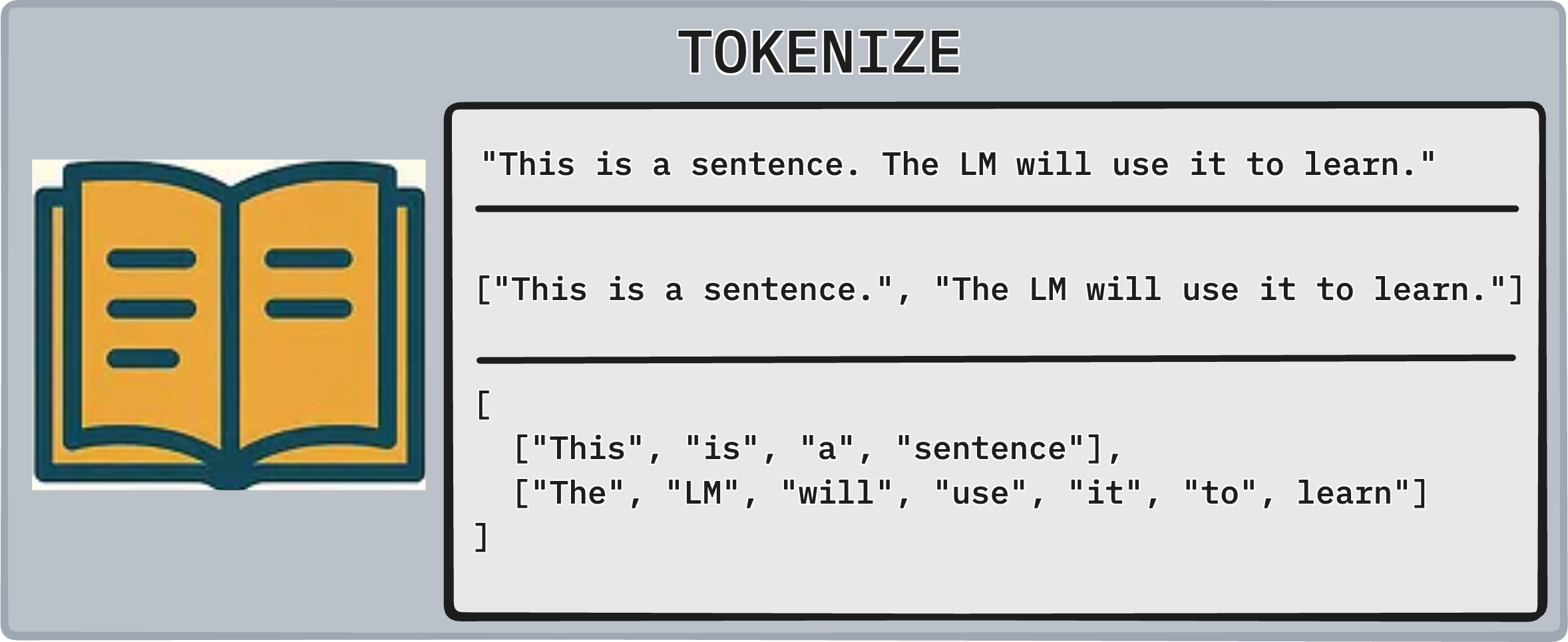
Tokenization — You broke text into tokens (words, subwords) before feeding them into your models. LLMs do the same thing, just with more sophisticated tokenizers (like Byte Pair Encoding) that handle rare words and multiple languages gracefully.
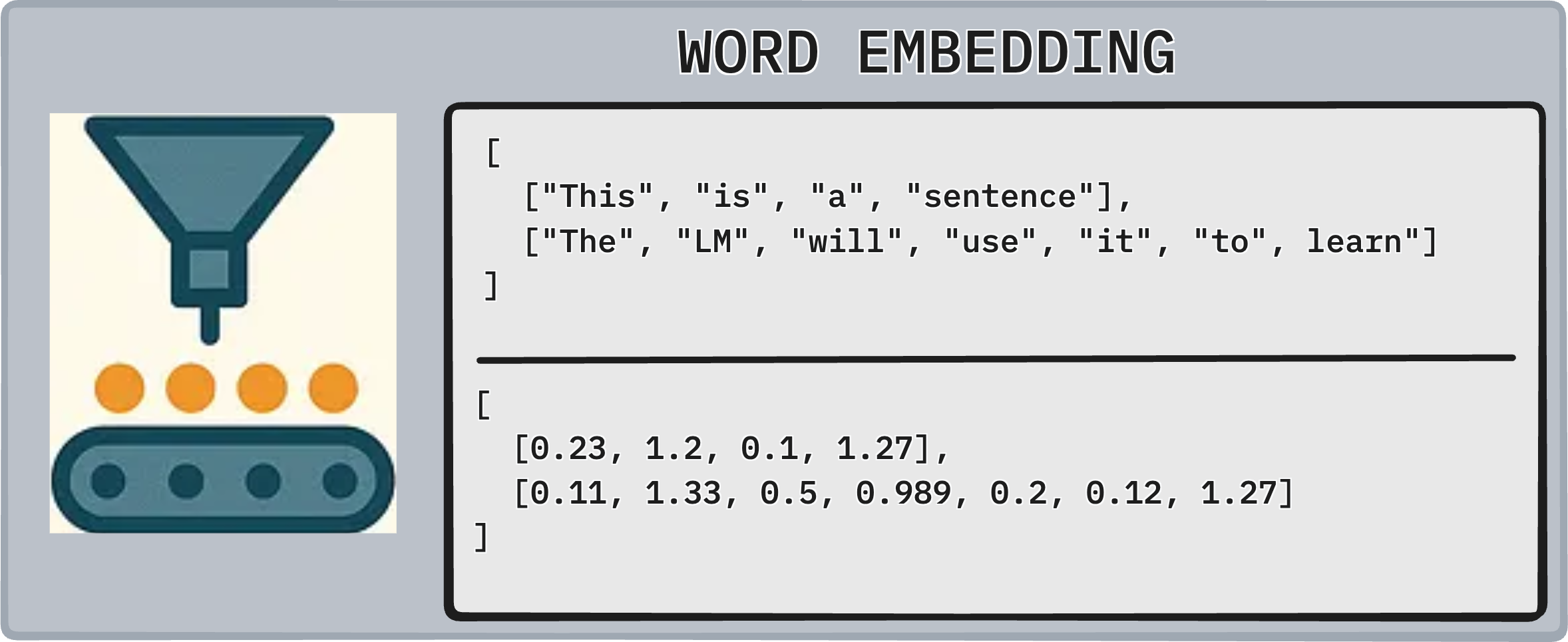
Embeddings — You converted tokens to dense vectors so the model could work with them mathematically. LLMs do this too. Every token maps to a high-dimensional embedding vector. Similar tokens cluster together in that space — just like your word2vec embeddings from the vectorization lesson.
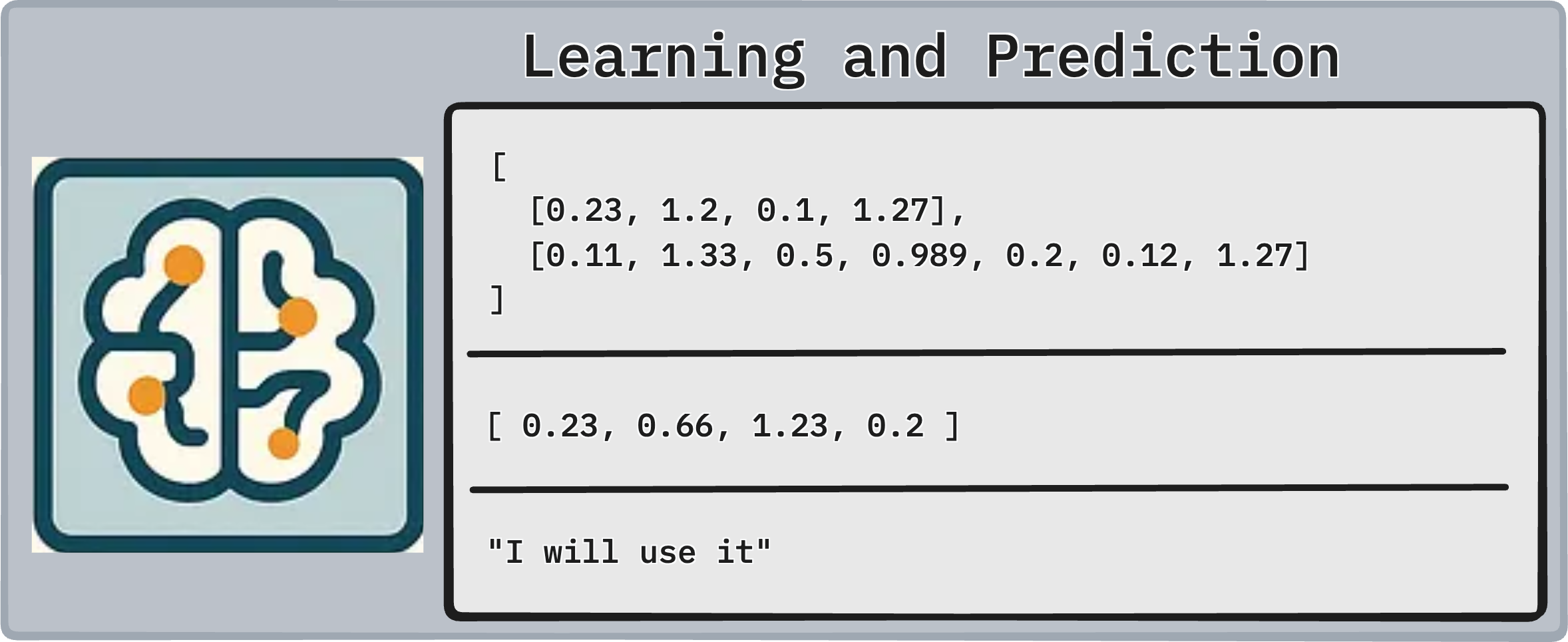
Neural Network Training Loop — You trained a PyTorch model by making a prediction, comparing it to the target with CrossEntropyLoss, computing gradients, and updating weights with Adam. LLMs train the same way:
- Take a sequence of real text from the training corpus
- Hide the last token
- Ask the model: "what token comes next?"
- Compare the model's prediction to the actual next token using cross-entropy loss
- Backpropagate and update billions of weights
This is called next-token prediction, and it's the training objective behind most modern LLMs. The model sees trillions of examples of this task — and in learning to predict the next token well across all of them, it develops deep representations of grammar, facts, reasoning, and style.
The difference between what you built and what an LLM is isn't conceptual — it's scale. Your chatbot had a few thousand parameters. GPT-4 has an estimated 1.8 trillion. Your training data was a few hundred labeled examples. LLMs train on hundreds of billions of tokens scraped from the internet, books, and code.
Same ideas. Incomprehensibly larger execution.
Rule and Retrieval Chatbots to Generative Chatbots — How & Why?
| Approach | How it responds | Domain | Limitation |
|---|---|---|---|
| Rule-Based | Matches pattern → returns hardcoded response | Closed | Breaks on anything outside defined rules |
| Retrieval-Based | Encodes input → finds closest response in a bank | Semi-closed | Can only return what was pre-written |
| Generative | Predicts next token from learned patterns | Open | May hallucinate; harder to control |
The fundamental shift from retrieval to generative is this: retrieval-based systems can only be as good as what you put in them. If a user asks something you didn't anticipate, the best they get is the closest thing you did write. Generative models compose new responses — they're not limited by the size or coverage of your response bank.
This is why the industry moved toward generative AI. Not because retrieval-based approaches are bad — they're still used heavily in production for their reliability and control — but because generative models unlocked open-domain conversation for the first time. A generative chatbot can handle questions its creators never thought of, in contexts they never prepared for.
The trade-off is hallucination: because the model is always composing new text rather than selecting from curated responses, it can confidently generate incorrect information. This is one of the central challenges in working with LLMs, and you'll encounter strategies for managing it throughout this module.
Common Types of LLMs
The LLM landscape has exploded in the last few years. Here are the four you're most likely to encounter as a developer:
GitHub Copilot
Purpose
GitHub Copilot is a code completion and generation tool built on top of OpenAI's Codex model (a GPT variant fine-tuned on public code repositories). It's deeply integrated into IDEs — most commonly VS Code — and designed to assist during active development.
Limitations
- Works best within the context of an open file or project — it lacks awareness of your full codebase unless context is explicitly provided
- Can suggest plausible-looking code that doesn't work, uses deprecated APIs, or introduces subtle bugs
- Not built for general conversation or explanation — it's a code-first tool
ChatGPT

Purpose
ChatGPT, built by OpenAI on the GPT series of models, is a general-purpose conversational AI. It excels at explanation, brainstorming, drafting content, reasoning through problems, and code assistance.
Tasks it excels at
- Long-form writing, editing, and summarization
- Step-by-step reasoning and math problem walkthroughs
- Code explanation and debugging assistance
- Broad Q&A across a wide range of domains
Tasks where it needs improvement
- Real-time or recent information (knowledge cutoffs apply unless browsing tools are enabled)
- Precise factual recall — it can confidently state incorrect details
- Complex multi-step agentic tasks that require sustained, reliable tool use
Gemini

Purpose
Gemini, built by Google DeepMind, is a multimodal LLM designed to work across text, images, audio, and code. It has strong integration with Google's ecosystem (Drive, Docs, Search) and competes directly with GPT-4 class models.
Tasks it excels at
- Multimodal reasoning (analyzing images alongside text)
- Tasks that benefit from Google Search integration (more up-to-date information)
- Coding tasks, especially with Gemini's longer context windows
- Cost-effectiveness — Gemini has a generous free API tier, which is why we'll be using it in this module
Tasks where it needs improvement
- Can be more verbose than necessary, requiring more explicit prompt guidance
- Instruction-following in complex multi-step prompts can be inconsistent compared to leading alternatives
- Creative writing and nuanced tone control lag behind some competitors
Claude

Purpose
Claude, built by Anthropic, is an AI assistant with a strong emphasis on safety, instruction-following, and long-context reasoning. It's the model powering — Claude Code — which you'll explore in detail in module 3 of this phase.
Tasks it excels at
- Long document analysis — Claude supports context windows up to 200K tokens
- Faithful instruction-following and nuanced task handling
- Code review, refactoring, and technical explanation
- Safety-conscious outputs — less likely to produce harmful or misleading content
Tasks where it needs improvement
- Can be overly cautious or add unnecessary caveats in certain domains
- Knowledge cutoff applies like all other LLMs — not connected to the web by default
- Performs best with clear, structured prompts; vague inputs can produce vague outputs
Choosing the Right AI
With so many options available, how do you decide which model to use for a given task?
Think of it like choosing a tool from a toolbox. A hammer and a screwdriver can sometimes do similar jobs — but the right tool makes the work easier and the result more reliable.
A few questions to ask when evaluating an LLM for a use case:
What modalities does the task require? Text only? Code? Images? Not every model handles all of these well. Gemini's multimodal capabilities make it a strong choice for vision + language tasks; Copilot is purpose-built for code in an IDE context.
How much control do I need over outputs? Rule-based and retrieval-based approaches offer predictable, auditable responses. If your application requires strict control — customer service, compliance, healthcare — the composability of generative models becomes a liability unless carefully managed with system prompts, output validation, and human review.
What is the cost and rate limit? For prototyping and learning, Gemini's free API tier is a practical starting point. Production applications need to account for token costs, rate limits, and latency.
Does the task require up-to-date information? All LLMs have knowledge cutoffs. If your use case needs current information, look for models with integrated search (Gemini with Google Search, ChatGPT with browsing enabled) or plan to implement Retrieval-Augmented Generation (RAG) — a pattern you'll learn later in this phase.
Is there a fine-tuned or specialized model? For narrow, high-stakes domains (medical, legal, financial), a smaller model fine-tuned on domain-specific data can outperform a general-purpose LLM at a fraction of the cost.
There is no universally best LLM. The right choice depends on the task, the constraints, and the context. A strong engineer knows the landscape well enough to pick deliberately — and to revisit that decision as the landscape evolves.
Use the table below as a quick reference when deciding which model fits your task:
| Task | Claude | Gemini | ChatGPT |
|---|---|---|---|
| Long document analysis / large context | ✅ Best (200K tokens) | ✅ Strong | ✅ Good (128K tokens) |
| Code generation and review | ✅ Strong | ✅ Strong | ✅ Strong |
| Real-time / up-to-date information | ❌ No web by default | ✅ Google Search integration | ⚠️ Browsing available (paid tier) |
| Multimodal reasoning (image + text) | ⚠️ Limited | ✅ Best | ✅ Strong |
| Creative writing and tone control | ✅ Strong | ⚠️ Tends to be verbose | ✅ Strong |
| Strict instruction-following | ✅ Best | ⚠️ Inconsistent on complex prompts | ✅ Good |
| Free API access for prototyping | ❌ Paid | ✅ Free tier available | ❌ Paid |
| Safety-conscious / low-risk outputs | ✅ Best | ✅ Good | ✅ Good |
| Step-by-step reasoning and math | ✅ Strong | ✅ Strong | ✅ Best (o-series models) |
Conclusion
You now have a grounded mental model of what Large Language Models are and where they come from.
LLMs are not magic — they are next-token predictors trained at extraordinary scale. The building blocks you worked with in module 07 — tokenization, embeddings, neural networks, backpropagation — are all present under the hood. What changed is the scale of the training data, the size of the model, and the sophistication of the architecture (the Transformer) that makes training at that scale computationally feasible.
Key takeaways from this lesson:
- LLMs generate text rather than retrieve it — each response is composed token by token from learned patterns
- The Transformer architecture and its attention mechanism enable models to consider the full context of a conversation simultaneously
- Generative models unlock open-domain conversation but introduce the risk of hallucination
- The current LLM landscape includes purpose-built tools (Copilot), general-purpose assistants (ChatGPT, Gemini, Claude), and everything in between
- Choosing the right model means evaluating modality, control requirements, cost, recency needs, and domain fit
In the next lesson, you'll learn how to communicate with these models effectively through prompt engineering — how to structure your inputs to get reliable, useful outputs.